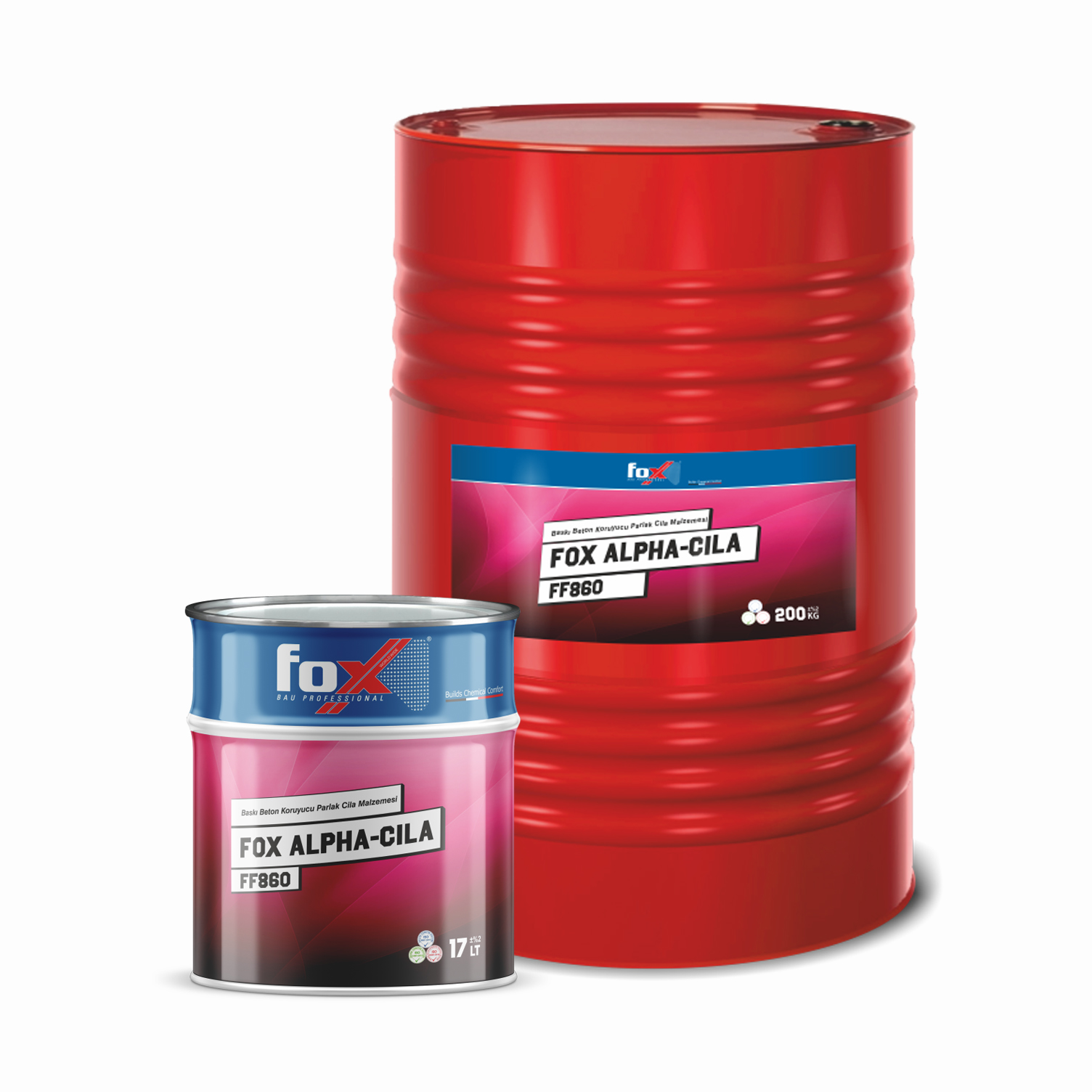


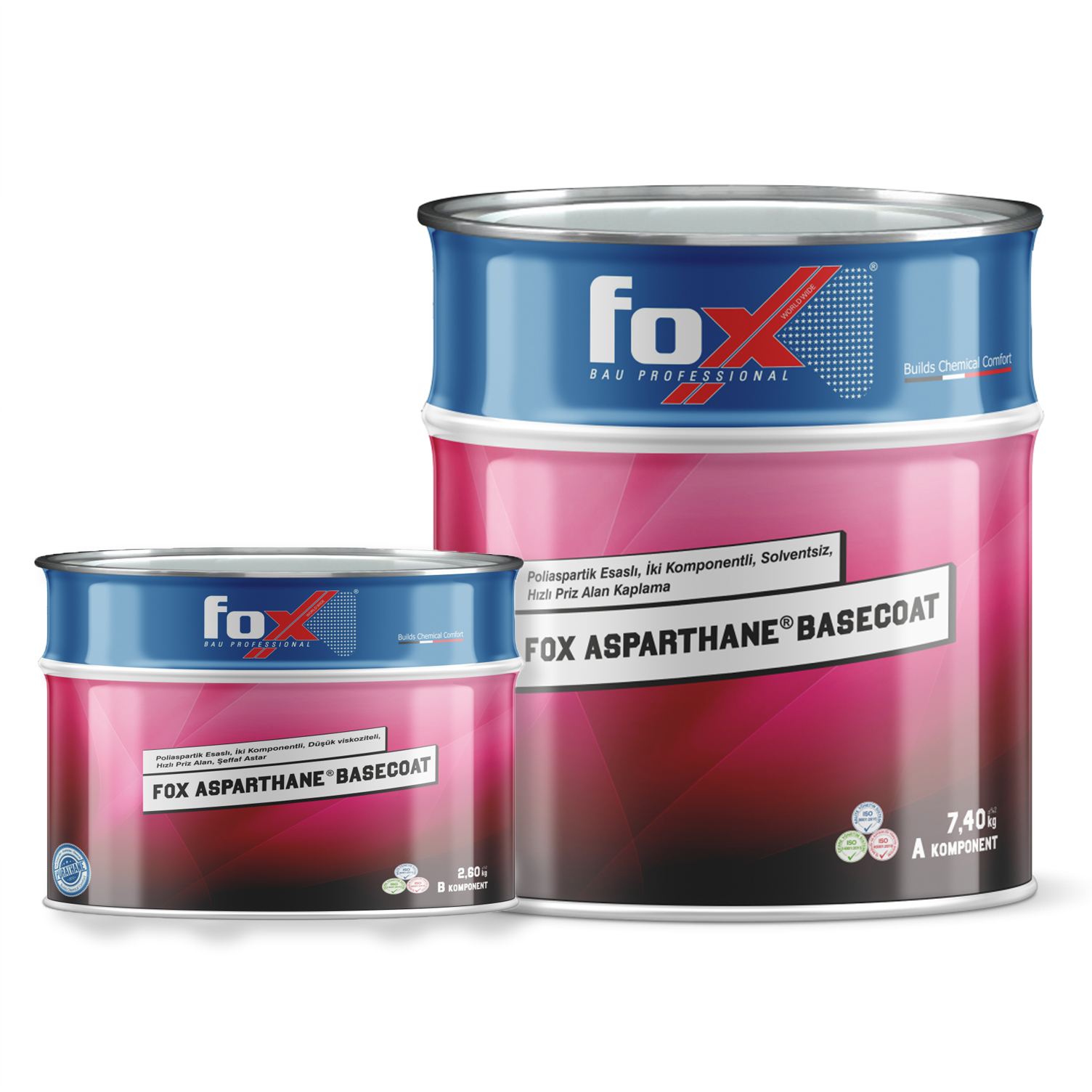
FOX ASPARTHANE® BASECOAT is a polyaspartic-based, two-component, high chemical resistance, fast-curing, low-viscosity, solvent-free, glossy, coloured floor coating material. With the ability to be opened to pedestrian traffic after approximately 2 hours and 4 times higher chemical and mechanical resistance compared to epoxy, it is the preferred choice for all industrial, commercial and hygiene-sensitive areas.
Colour Palette
RAL Colours
Packaging
10 kg
Product Description
FOX ASPARTHANE® BASECOAT is a polyaspartic-based, two-component, high chemical resistance, fast-curing, low-viscosity, solvent-free, glossy, coloured floor coating material. With 100% solid content, the product is completely solvent-free and, thanks to its aliphatic structure, provides long-term colour and gloss stability. It offers 4 times higher chemical and mechanical resistance compared to epoxy-based coatings. It can be opened to pedestrian traffic in approximately 2 hours while reaching full strength in 7 days. Available in RAL colour range and can also be used in decorative systems with FOX DECO FLAKE and coloured quartz. Applied by self-levelling and roller application methods at a recommended thickness of 0.2 mm – 1 mm.
Advantages
- High chemical and mechanical resistance (4 times compared to epoxy).
- Fast setting (can be opened to pedestrian traffic after approximately 2 hours).
- It is an aliphatic coating.
- Easy to maintain and clean.
- Provides hygienic environments.
- Liquid-tight.
- Glossy topcoat finish is achieved.
- High adhesion strength.
Usage Areas
- Areas exposed to medium/light traffic loads
- Areas requiring chemical resistance
- Production areas
- Aircraft hangars
- Garages
- Airports
- Hotels and shopping centres
- Supermarkets, shops and showrooms
- Hospitals and nursing homes
- Clinics
- Schools and nurseries
- Chemical and pharmaceutical industry
- Laboratories
- Areas where hygiene is required
- Decorative applications with FOX DECO FLAKE and coloured quartz
Application Steps
- 1
Surface Preparation
Concrete substrates to be coated must be prepared by removing the cement laitance using abrasive equipment such as shot blasting, milling or diamond grinding to achieve an open-pore surface. Weak concrete sections must be removed, small voids and holes must be fully opened and dust must be removed with an industrial vacuum. Voids and surface repairs must be carried out using a mortar obtained by mixing 60–70 AFS (0.1–0.3 mm) quartz sand with FOX EPOTHANE® PRIMER series primer.
- 2
Checking Application Conditions
Substrate moisture content must be below 4% (measured by CM or oven method), relative air humidity must be a maximum of 60%, substrate temperature must be a minimum of +10°C and must be at least +3°C above the dew point. Rising damp must be checked using the ASTM polyethylene sheet test.
- 3
Mixing
Ensure that product temperatures are between +15°C and +25°C. Mix component A with an electric mixer (300–400 rpm) and an appropriate mixing paddle until a homogeneous colour is achieved, ensuring no product remains on the bottom and sides of the container. Then add component B completely and mix for at least 3 minutes.
- 4
Priming
Surfaces to be coated with FOX ASPARTHANE® BASECOAT must be primed beforehand with 1 or 2 coats of FOX ASPARTHANE® PRIMER series. Ensure that the substrate temperature is a minimum of +10°C and apply BASECOAT over the primer within the specified time.
- 5
Self-Levelling Application
FOX ASPARTHANE® BASECOAT is poured onto the surface and spread evenly with a notched trowel. Once the coating reaches the appropriate consistency, air is released using a spike roller. Delay in spike roller application may cause marks on the surface.
- 6
Roller Application
FOX ASPARTHANE® BASECOAT is poured onto the surface in equal amounts and at equal intervals and applied homogeneously in two coats using a short-nap roller.
- 7
Tool Cleaning
Tools and equipment used after application must be cleaned with solvent. Once the product has cured, it can only be removed by mechanical means.
Critical
After application is complete, the coating must be protected from direct water contact for at least 24 hours. In case of water contact, the entire coating must be removed and reapplied.
Critical
Surface and ambient temperature must be a minimum of +10°C and a maximum of +30°C. Application must not be carried out outside this range.
Critical
Concrete substrates to be coated must be at least 3 weeks old. A vapour barrier layer must be created on slabs laid on ground.
Critical
Substrate moisture content must be below 4%. There must be no rising damp according to ASTM (polyethylene sheet test).
Critical
Attention must be paid to dew point and condensation. Substrate temperature must be at least +3°C above the dew point.
Critical
Mixing must be carried out with an electric mixer at 300–400 rpm and an epoxy/polyurethane resin mixing paddle. Failure to use the appropriate mixing paddle will result in air bubbles on the coating.
Important
Relative air humidity must be a maximum of 60%.
Important
Materials must be brought to the application site 1–2 days before application and allowed to acclimatise to ambient conditions.
Important
In cold weather, ambient and substrate temperatures must be raised; packaging should be kept at +20°C – +25°C until ready for use.
Important
Contact of rain, dust, wind, animals and insects with the fresh coating must be prevented.
Important
Once the product has cured, it can only be removed from the surface by mechanical means. Application tools must be cleaned with solvent after use.
Important
Shelf life is 6 months from the date of manufacture when stored between +10°C and +30°C, away from direct sunlight and under correct conditions.
Important
Must be stored in its original unopened packaging in a cool and dry environment, protected from frost. During short-term storage, a maximum of 3 pallets may be stacked on top of each other.
Critical
It is dangerous to approach storage and application areas with open flame; these areas must be ventilated.
Critical
Protective work clothing, gloves, goggles and a mask must be worn during application. In case of contact with skin or eyes, wash thoroughly with plenty of water and soap; if swallowed, consult a doctor immediately.
Information
The product is not to be thinned.
Information
The technical values above are given for conditions of +23°C and 50% relative humidity. Higher temperatures shorten the times; lower temperatures extend them.
Related Products
Similar products to this item