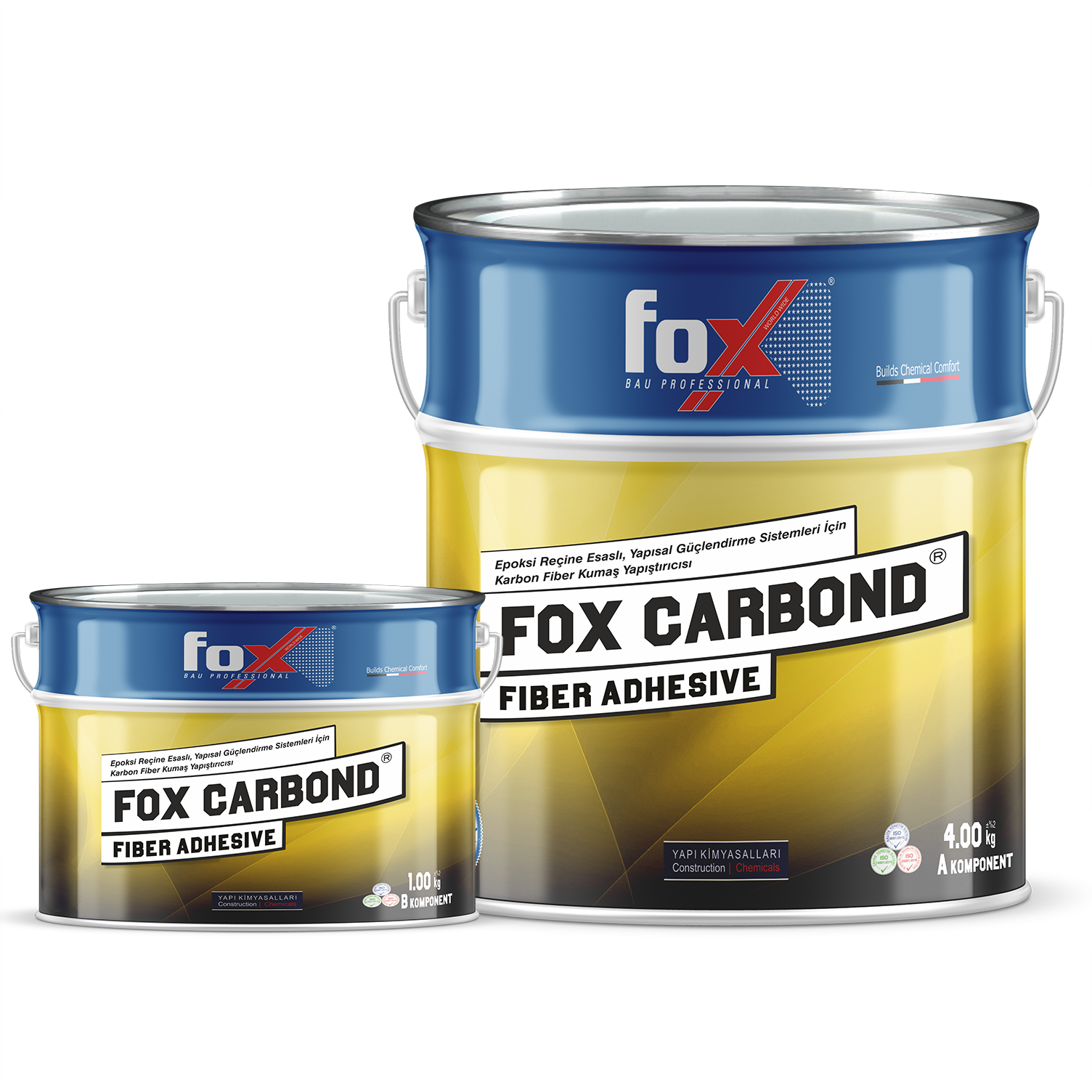


FOX CARBOND® PLATE ADHESIVE is an epoxy-based, two-component (A: Epoxy Resin, B: Epoxy Hardener), high-strength carbon plate adhesive specially developed for structural strengthening systems. It is used for bonding carbon fibre polymer plates (laminates) to the surfaces of structural elements to be strengthened. Its thixotropic nature makes it easy to apply and prevents sagging on vertical surfaces. It achieves compressive strength >40 N/mm² and flexural strength >20 N/mm² in 7 days; adhesion to concrete is >3 N/mm². The product is supplied as a ready-to-use set, and the use of FOX CARBOND® PRIMER is mandatory prior to application.
Colour Palette
Packaging
6 kg
Product Description
FOX CARBOND® PLATE ADHESIVE is an epoxy-based, two-component (A: Epoxy Resin, B: Epoxy Hardener), high-strength carbon plate adhesive specially developed for structural strengthening systems. It is used for bonding carbon fibre polymer plates (laminates) to the surfaces of structural elements to be strengthened. Its thixotropic nature makes it easy to apply and prevents sagging on vertical surfaces. It achieves compressive strength >40 N/mm² and flexural strength >20 N/mm² in 7 days; adhesion to concrete is >3 N/mm². The product is supplied as a ready-to-use set, and the use of FOX CARBOND® PRIMER is mandatory prior to application.
Key Benefits
- High compressive (>40 N/mm²) and flexural (>20 N/mm²) strength provides long-lasting load-bearing capacity to strengthened structural elements.
- Forms a reliable and permanent bond with adhesion to concrete of >3 N/mm².
- Thixotropic formulation allows easy application on vertical and overhead surfaces without sagging.
- Two-component ready-set packaging minimises the risk of on-site mixing errors.
- Its suitability for use by specialist applicators makes it a trusted choice for critical structural strengthening projects.
- Offers a fully compatible integrated system solution with FOX CARBOND® system products (PRIMER, PLATE).
Advantages
- Thixotropic in nature and easy to apply.
- Does not sag in vertical applications.
- High mechanical strength.
- Provides high adhesion to concrete surfaces.
Usage Areas
- Used for bonding carbon fibre plates to the surfaces of structural elements to be strengthened.
Application Steps
- 1
Surface Preparation
Surfaces to be strengthened must be sound, dry, load-bearing, dust-free and clean. The surface must be thoroughly cleaned of oil, grease, rust and paraffin residues that would impair adhesion. Surface defects must be repaired with structural repair mortars, and the surface must be primed with FOX CARBOND® PRIMER.
- 2
Mixing
Before starting to mix, ensure that the product temperatures are between +5°C and +30°C. Mix Component A of FOX CARBOND® PLATE ADHESIVE with a suitable mixer for 30 seconds without entraining air. Then pour Component B onto Component A; ensure that no material remains in the Component B container. The mixture must be continuously mixed for 2–3 minutes until a homogeneous consistency is achieved.
- 3
Application
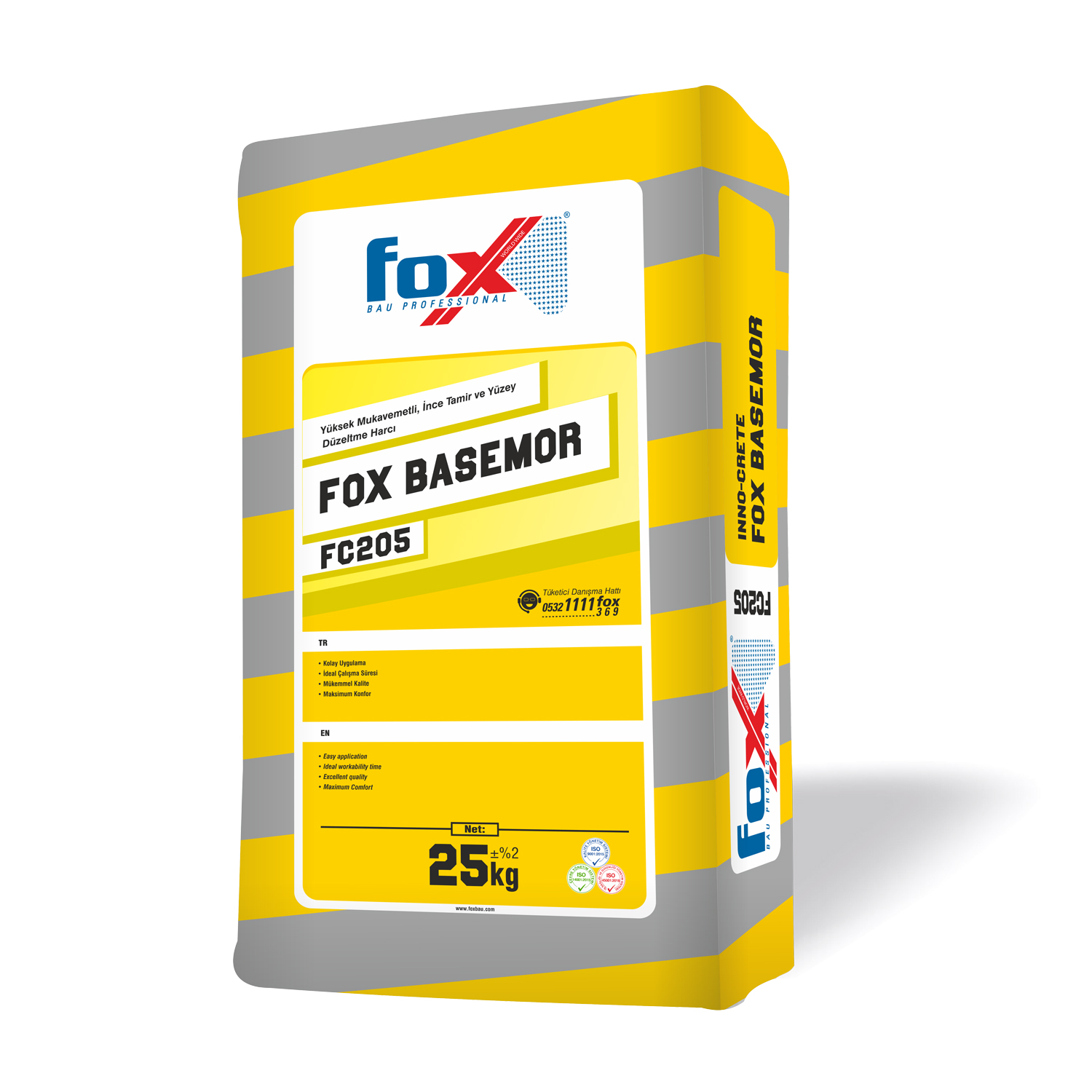
Application must begin within 24 hours following the application of FOX CARBOND® PRIMER. The material should be applied with a spatula to the smooth surfaces of the pre-prepared FOX CARBOND® PLATE (carbon fibre polymer plates/laminates) to achieve a thickness of 1–1.5 mm. At the same time, adhesive should also be applied with a spatula to the primed concrete surfaces at a thickness of 1–1.5 mm. The carbon fibre polymer plates with adhesive applied to their backs should be fixed by applying slight tension in the direction of the fibres, ensuring no blistering occurs. The carbon plates should be pressed with a roller in the direction of the fibres to ensure no voids remain between them and the concrete surface. In areas requiring protection from sunlight, the surface of FOX EPOTHANE® PRIMER should be sand-blasted and covered with FOX BASEMOR FC205 repair mortar. Where fire resistance is required, the surface should be covered with special fire-resistant mortars at an appropriate thickness.
- 4
Tool and Equipment Cleaning
Tools and equipment used should be cleaned immediately with solvent after application. Once FOX CARBOND® PLATE ADHESIVE has hardened, it can only be removed from the surface mechanically.
Critical
FOX CARBOND® PLATE ADHESIVE must not be applied at temperatures below +5°C or above +30°C.
Critical
Application of FOX CARBOND® PLATE ADHESIVE must begin within 24 hours following the application of FOX CARBOND® PRIMER.
Critical
Solvents or similar thinners must not be added to the mixture during application.
Critical
Mixing must always be carried out using suitable mechanical mixers. Hand mixing must not be performed.
Critical
FOX CARBOND® structural strengthening systems must be applied by specialist applicators.
Important
Materials to be used should be brought to the application site 1–2 days in advance and allowed to acclimatise to ambient conditions.
Important
In cold weather applications, the ambient and substrate temperature should be raised; packaging should be kept at +20°C–25°C to bring the products to a workable condition.
Important
Rain, dust, wind, animals and insects must be prevented from coming into contact with the coating while it is still fresh.
Important
In resin-based systems, pot life and curing times are affected by ambient temperature, substrate temperature and air humidity. Curing slows at low temperatures.
Important
Care should be taken to prepare only as much material as can be used within the working time.
Important
Opened packaging must be resealed and consumed within 1 week.
Critical
Approaching storage and application areas with open flames is dangerous; areas must be ventilated.
Critical
Protective clothing, gloves, goggles and a mask must be worn during application. Contact with skin and eyes must be avoided; in case of contact, wash thoroughly with plenty of water and soap; if swallowed, seek medical attention immediately.
Important
Food and beverages must not be brought into application areas; the product must be stored out of reach of children.
Information
When stored at room temperature, away from direct sunlight, between +5°C and +30°C, the shelf life is 12 months from the date of manufacture.
Information
Technical data are given for +23°C and 50% relative humidity conditions. Higher temperatures shorten the curing time; lower temperatures extend it.